honda accord

honda accord wallpapers

honda accord

honda accord pictures

honda accord wallpapers

honda accord wallpapers
honda accord
honda accord pictures
honda accord wallpapers

Opel Flextreme Concept was introduced at the International Motor Show (IAA) in
Opel Flextreme Concept has a dynamic and innovative exterior and interior design. Flextreme has a large transparent roof and two tailgate doors that open from the side and swing upwards it also has narrow boomerang shaped lights and sloping swage line in the side graphics. The front part is decorated with front grill and rims which are covered by lightweight transparent trim made from polycarbonate to improve aerodynamics and enhancing visual aesthetics. This concept car has a unique and practical door which they call the FlexDoors, the front door open in the conventional manner and the rear door are rear hinged.

Flextreme Concept has a futuristic interior design with honeycomb structures. The honeycomb structure is a functional, geometric structure located in the instrument panel’s lower portion, above the center tunnel where the lithium-ion batteries are located, cabin floor and cargo floor. This cool automotive has a large panoramic display located directly under the windshield and on the center console. The display are configurable with a touch screen operation to show a complete view of the car surrounding and easy access to various menu such as air conditioning, communication device, infotainment feature and navigation functions.

 Mazda did so in the first generation by pointing the air intake at the firewall, basically aiming a trumpet at the driver. It worked, at least from a sports car sound standpoint, but it required pulling in hot underhood air into the engine intake, which is bad for performance. For 2009, Mazda decided to bring in cooler ambient air for more consistent performance, ducting it from the front of the car. But that reduced the amount of the intake sounds heard by the driver. To recover that, Mazda experimented with reverberation chambers attached to the intake system and aimed that at the Miata's firewall.


“It’s the sports car of the future, the way BMW imagines it.” That’s how Adrian van Hooydonk, director of BMW’s group design, describes the “BMW Vision Efficient Dynamics” two-door concept vehicle to be unveiled at the upcoming Frankfurt Auto Show. Think of it as a showcase of the many fuel-efficient technologies that BMW has in various stages of development. Some of the technologies already appear in production vehicles, while the feasibility of rolling out other systems stretch the future to the point of never.
BMW’s overarching goal was to combine breath-taking speed and groundbreaking efficiency. In the BMW Vision, that boils down to 4.8-second 0-to-60 miles per hour acceleration and 63 mile to the gallon.

First, BMW engineers use the rear-axle to combine a turbo-charged small diesel engine and the mildest forms of hybrid technology. That kind of combo comes standard in BMW 1-series cars in Europe. The Vision's setup is a little more similar to the BMW 320d, also to debut in Frankfurt, which uses a 2.0-liter four-cylinder diesel to deliver 162 horsepower, while promising more than 57 miles to the gallon. The BMW Vision takes it a step further by downsizing the engine to a 1.5-liter three-cylinder diesel engine mated with the more robust hybrid system found in the pricey BMW ActiveHybrid7, expected in the US early next year.
Not satisfied with 162 horsepower, BMW adds a second motor to drive the front wheels exclusively by electricity. When both motors and the diesel engine are called into service, the overall system can put out 356 horsepower. The BMW Vision is lightweight and aerodynamic. The design features an aluminum chassis and suspension, and an outer skin made mostly of polycarbonate glass. The car’s slippery design boasts a drag coefficient of 0.22—beating out the Toyota Prius’s 0.25.

To mitigate the fuel efficiency penalty paid for power, the BMW Vision utilizes plug-in hybrid technology. This is where the Vision becomes more of a fantasy. The combination of diesel and hybrid technologies is widely viewed as cost prohibitive. Adding enough battery power to allow the BMW Vision EfficientDynamics to travel for 30 miles of all-electric drive, as BMW is promising, would send costs through the roof.
BMW also indicates that the Vision only needs a 187-pound 10.8 kWh battery to achieve the 30-mile all-electric goal. To pull that off, the Vision, according to BMW, will discharge the battery pack's capacity by 80 percent, which is likely to significantly reduce the longevity of the battery. (The Chevy Volt will use about 50 percent of its capacity to help ensure a lifetime of use.)
Slipping further into fantasy—of course, the vehicle is mostly eye candy—the BMW Vision’s energy management system uses sensors to anticipate the driver’s needs to adjust engine, motors, electrical components, and even front grille louvers for maximum efficiency and performance. For example, the management system could anticipate traffic congestion ahead to increase regenerative braking or expect a merge on to a highway to let the engine hum and the motors buzz. BMW says the system can even help you more quickly find a parking space.
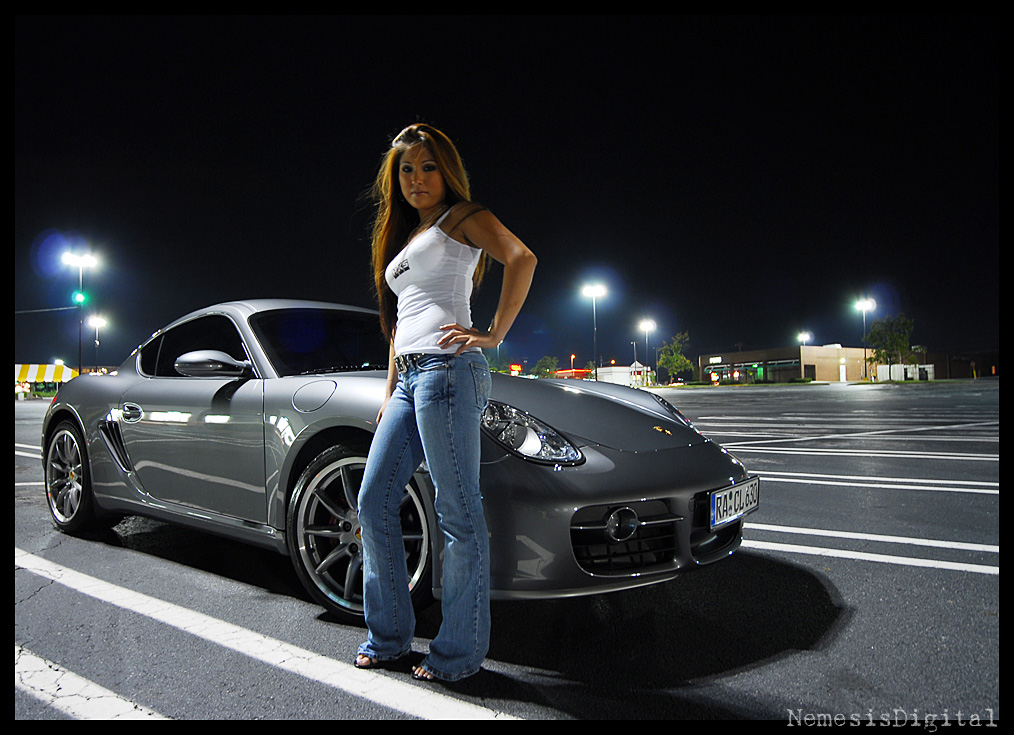
Motor Trend Magazine has chosen the Porsche
Cayman S as the "Best Driver's Car" for 2009. Additionally, the Cayman was
also picked by British car journal Auto Express as "Best Sports Car" in their
New Car Awards 2009. In both cases Porsche's mid-engined coupe won over
experts with its driving dynamics, precision, feedback and response.

Featuring PDK (Porsche Doppelkupplung), Porsche's Double-Clutch Gearbox, the
Cayman S impressed Motor Trend on both regular roads and the race track,
making its way to the top against nine other thoroughbred sports cars. The
test team included select members of the Motor Trend staff as well as two
professional race drivers - Randy Pobst and Massimiliano "Max" Angelelli.

With its circulation of 1.1 million copies and 7.6 million readers, Motor
Trend, an internationally renowned magazine, is acknowledged as one of the
leading car magazines in the USA.

Auto Express, the British car journal, was equally clear in emphasizing that
the Cayman leads the sports car scene with unrelenting efficiency. The title
of "Best Sports Car" was won with the ultimate blend of traction, balance, and
agility. Apart from the characteristic sound of the boxer engines, the testers
also lauded the practical qualities of the Cayman with its two luggage
compartments and large tailgate.

Auto Express is the best-selling car journal in Great Britain.

Along with the Porsche Boxster, the newest generation of the Cayman has been
available since February of this year. Its newly-developed six-cylinder boxer
engine provides exceptional fuel economy and performance - 320 horsepower
delivered by the 3.4-liter power unit in the Cayman S and 265 hp from the
2.9-liter engine in the Cayman. Both models are EPA rated at 29 mpg highway
and both fulfill the strict EU5 emission standard in Europe and the ULEV
standard in the USA.

Distinguishing itself from the other competitors in the "Best Driver's Car"
competition, the Cayman S also remains below the fuel consumption limit for
Gas Guzzler Tax.

Follow us: www.twitter.com/PorscheNewsWire and www.facebook.com/Porsche

Note: Photos of the 2009 Porsche Cayman and Cayman S are available to
accredited journalists on the Porsche Press Database at www.press.porsche.com
- Porsche footage is available to registered users at
http://thenewsmarket.com/porsche.

About Porsche Cars North America, Inc.
Porsche Cars North America, Inc. (PCNA), based in Atlanta, Ga., is the
exclusive importer of Porsche sports cars and sport utility vehicles for the
United States. It is a wholly owned, indirect subsidiary of Dr. Ing.h.c. F.
Porsche AG. Approximately 200 PCNA employees provide Porsche vehicles, parts,
service, marketing and training for its 202 dealers. The dealers, in turn,
provide Porsche owners with best-in-class service. Throughout its 61-year
history, Porsche has developed numerous technologies that have advanced
vehicle performance, improved safety and spurred environmental innovations
within the automotive industry. The company continues to celebrate its
heritage by adding to its long list of motorsports victories dating back to
its first 24 Hours of Le Mans class win in 1951. Today, with more than 28,000
victories, Porsche is recognized as the world's most successful marque in
sports car racing. PCNA, which imports the iconic 911 series, the Boxster and
Cayman mid-engine sports cars, the high performance Cayenne sport utility
vehicles and soon the Panamera gran turismo for the U.S., strives to maintain
a standard of excellence, commitment and distinction synonymous with its
brand.